
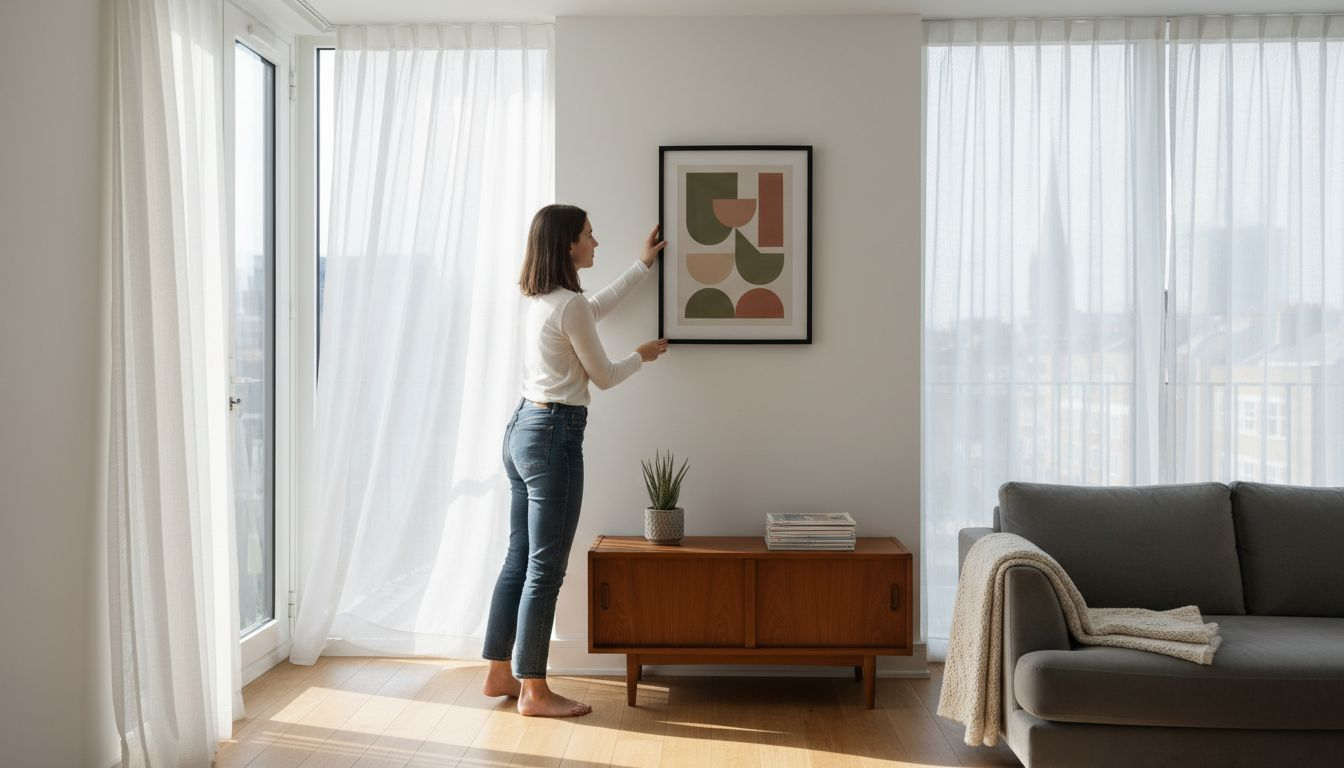
Finding artwork that nurtures a sense of calm without sacrificing style is a familiar challenge for many city homeowners. Minimalist wall art offers a purposeful alternative, embracing simplicity and intentional design drawn from both Zen philosophy and Western modernist thought. For Millennials seeking interiors that feel open and thoughtfully curated, this approach prioritises clarity and material honesty. Discover how minimalist wall art can transform urban spaces into retreats that balance visual interest with tranquillity.
Table of Contents
- Defining Minimalist Wall Art And Common Myths
- Popular Styles And Material Variations
- Key Elements: Colour, Composition, And Space
- Integrating Minimalist Art Into Urban Homes
- Shopping Tips And Common Pitfalls To Avoid
Key Takeaways
| Point | Details |
|---|---|
| Understanding Minimalist Art | Minimalist wall art embodies a philosophy of simplicity and intentional design, transforming spaces with its profound meaning and visual clarity. |
| Common Misconceptions | It is often mistakenly perceived as lacking creativity; however, it requires skill and intentionality to distil complex ideas into essential visual forms. |
| Integration into Urban Spaces | Thoughtfully integrating minimalist art can enhance urban interiors by providing visual breathing room and creating a dialogue with existing architecture. |
| Strategic Shopping Approaches | When selecting minimalist art, consider scale, colour harmony, and material quality to maximise design impact while maintaining the essence of minimalism. |
Defining Minimalist Wall Art and Common Myths
Minimalist wall art represents a deliberate aesthetic approach that transcends mere decoration, embodying a philosophy of simplicity and intentional design. Emerging from mid-20th-century artistic movements, minimalist art strips away unnecessary ornamentation to reveal essential visual elements.
At its core, minimalist wall art embraces several fundamental characteristics:
- Geometric precision
- Restricted colour palette
- Clean, uncluttered compositions
- Emphasis on negative space
- Materials with inherent visual integrity
Contrary to popular misconceptions, minimalist wall art is not about creating sterile or emotionless spaces. Instead, it’s a thoughtful approach to visual storytelling that allows each carefully selected element to communicate profound meaning. The art form demands careful curation, where every line, shape, and colour serves a deliberate purpose.
Many urban dwellers mistakenly believe minimalist art is limited or lacks creativity. However, this couldn’t be further from the truth. Minimalism represents a radical simplification that requires tremendous skill and intentionality. Artists must distil complex ideas into their most fundamental visual representations, creating powerful statements through restraint.
To help clarify the philosophy versus the misconceptions behind minimalist wall art, consider this comparison:
| Aspect | Minimalist Wall Art Philosophy | Common Misconceptions |
|---|---|---|
| Creativity | Intentional, highly curated visual ideas | Lacks creativity or imagination |
| Emotional Impact | Subtle, contemplative, quietly powerful | Emotionless or sterile |
| Complexity | Complexity distilled to essentials | Overly simplistic or basic |
| Role in Interiors | Enhances calm and visual clarity | Makes spaces feel empty or unfinished |
Pro tip: When selecting minimalist wall art, focus on pieces that resonate with your personal aesthetic and create visual breathing room in your living space.
Popular Styles and Material Variations
Minimalist wall art encompasses a diverse range of styles and material choices that reflect both artistic philosophy and contemporary design sensibilities. Industrial materials form the core of minimalist expression, challenging traditional notions of artistic creation and representation.
The most prevalent minimalist wall art styles include:
- Geometric Abstraction: Sharp lines, precise angles, and mathematical symmetry
- Monochromatic Compositions: Single-colour works exploring tonal variations
- Conceptual Line Art: Simple linear drawings that communicate complex ideas
- Digital Minimalism: Computer-generated graphics with extreme simplification
- Architectural Prints: Architectural blueprints and structural representations
When exploring material variations, artists and designers have expanded beyond traditional canvas, incorporating unconventional surfaces that highlight material authenticity. Prefabricated industrial materials such as steel, aluminum, and fluorescent tubes become artistic statements, emphasising fabrication techniques and material integrity.
Contemporary minimalist wall art frequently blends multiple approaches, using materials like aluminium panels, concrete surfaces, tempered glass, and precision-cut metal sheets. These materials are chosen not just for aesthetic appeal, but to communicate a deeper narrative about simplicity, functionality, and spatial interaction.
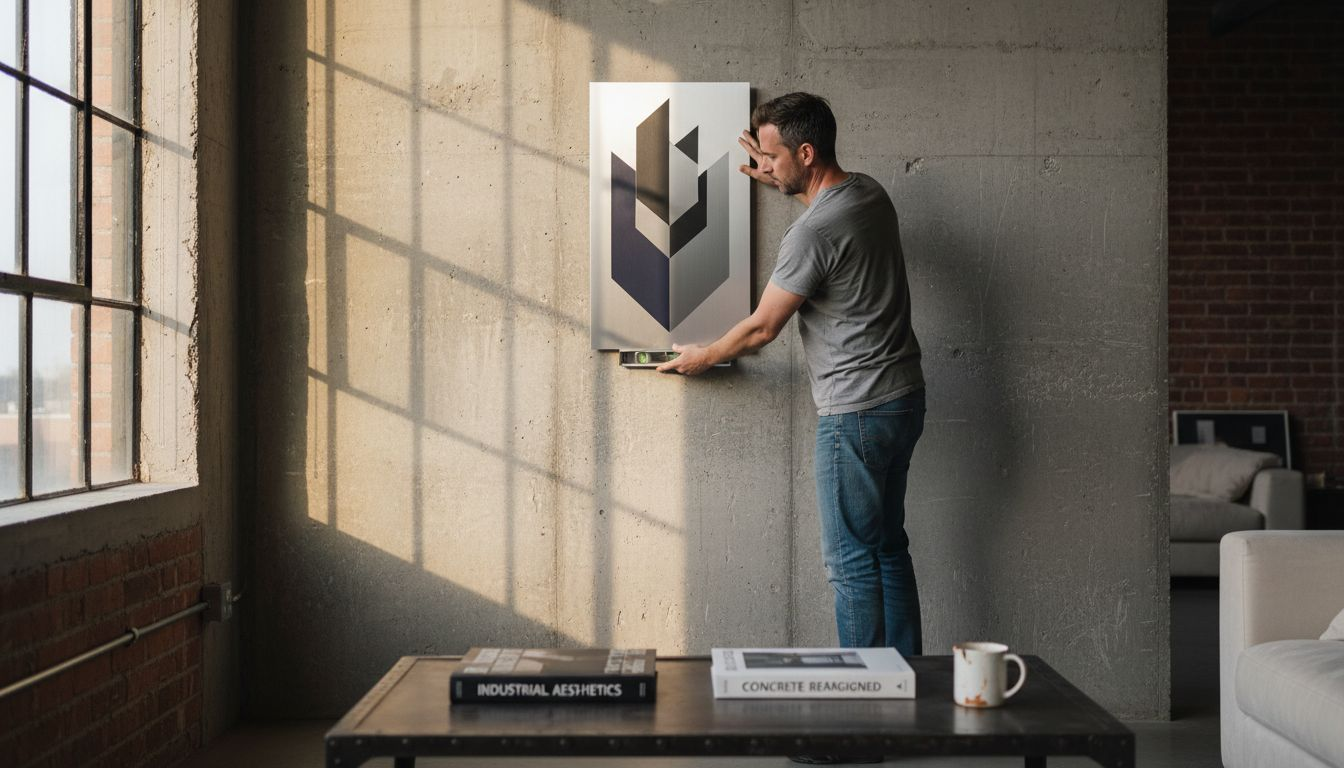
Pro tip: Select minimalist wall art that complements your space’s architectural elements, allowing the material and design to interact harmoniously with your existing environment.
Key Elements: Colour, Composition, and Space
Minimalist wall art transcends mere visual appeal by transforming fundamental design elements into profound artistic statements. Spatial relationships become an active artistic element, challenging traditional perceptions of artistic representation.
The key elements of minimalist wall art can be understood through three critical dimensions:
- Colour: Restrained palettes that communicate emotional subtlety
- Composition: Geometric precision and deliberate spatial arrangement
- Negative Space: Strategic emptiness that enhances visual impact
- Material Interaction: Surfaces that reveal inherent textural qualities
- Structural Clarity: Designs that prioritise essential visual information
Colour in minimalist wall art operates beyond traditional aesthetic principles. Rather than creating emotional narratives, colours are carefully selected to define spatial boundaries, create visual rhythm, and establish conceptual relationships. Monochromatic schemes and muted tones dominate, allowing viewers to engage with form and structure more directly.
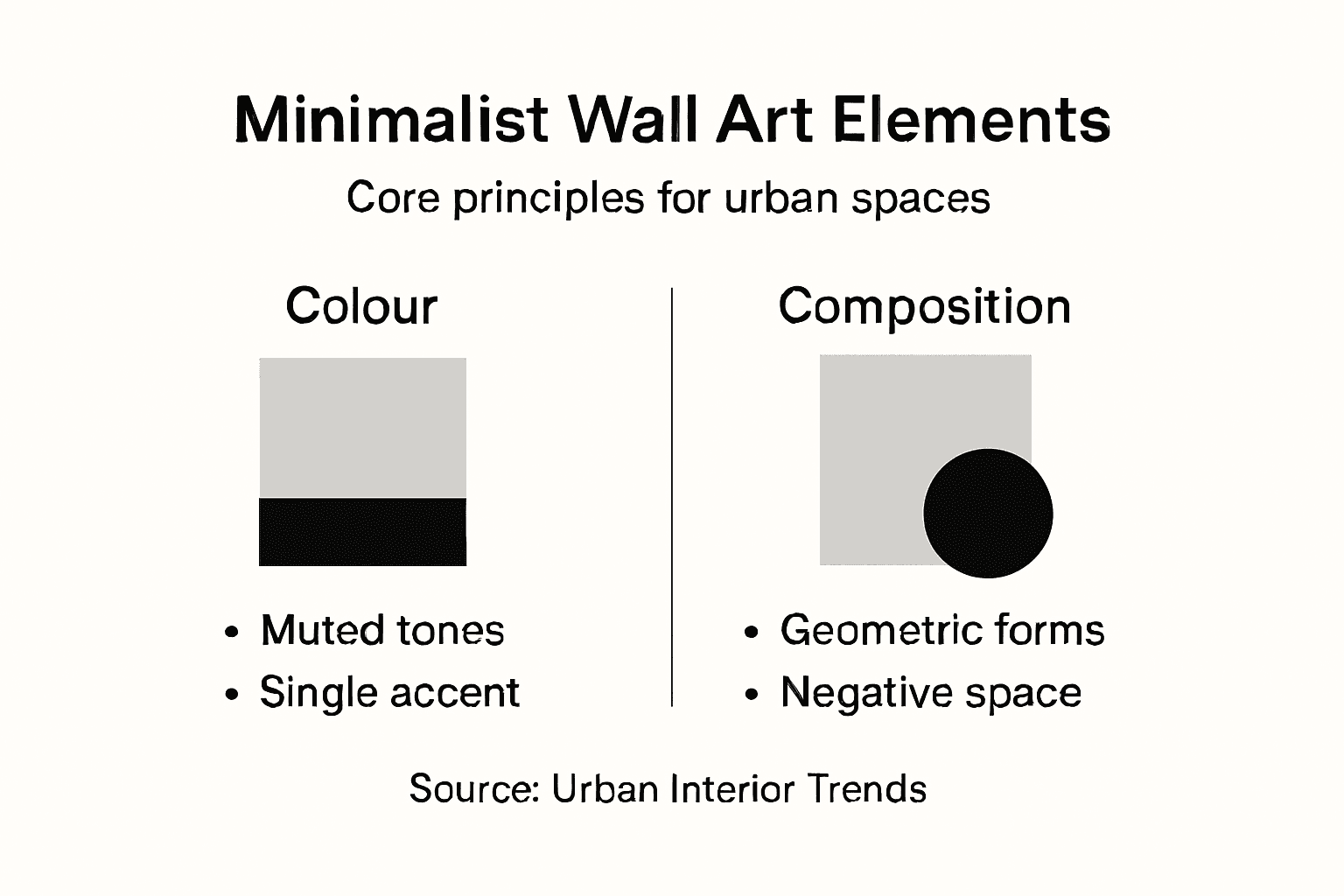
Geometric forms and spatial dynamics are central to minimalist composition. Artists like Frank Stella demonstrated that art should be experienced as an immediate, unmediated presence. The artwork becomes an object of contemplation, inviting viewers to explore its intrinsic qualities without relying on representational interpretation.
Pro tip: When selecting minimalist wall art, prioritise pieces that create a dialogue between colour, form, and the surrounding architectural space.
Integrating Minimalist Art into Urban Homes
Contemporary urban living demands intentional design choices that transform living spaces into reflective, purposeful environments. Minimalist wall art emerges as a powerful strategy for urban dwellers seeking to create meaningful, uncluttered interiors that balance aesthetic sophistication with emotional tranquillity.
Successful integration of minimalist art into urban homes requires strategic considerations:
- Spatial Awareness: Understanding room proportions and architectural lines
- Colour Coordination: Selecting pieces that complement existing colour schemes
- Scale and Placement: Choosing artworks that enhance rather than overwhelm spaces
- Functional Aesthetics: Ensuring art serves both visual and psychological purposes
- Material Harmony: Matching artwork materials with interior design elements
Urban interiors benefit immensely from minimalist art’s ability to create visual breathing room. Unlike traditional decorative approaches, minimalist pieces transform walls into contemplative surfaces that reduce visual noise and promote mental clarity. Millennial design preferences increasingly favour experiences over possessions, making minimalist wall art an ideal solution for compact urban living spaces.
The key to successful minimalist art integration lies in understanding its role beyond mere decoration. These artworks become architectural elements that dialogue with room geometry, light, and existing design features. By selecting pieces that embody simplicity, structural integrity, and purposeful design, urban residents can create living environments that feel both expansive and deeply personal.
This table summarises recommended strategies for integrating minimalist art into urban homes:
| Strategy | Purpose | Example Implementation |
|---|---|---|
| Spatial Awareness | Achieve balance with room proportions | Align frames to architectural lines |
| Colour Coordination | Maintain coherence with interiors | Use artwork with muted tones |
| Functional Aesthetics | Combine decor with psychological impact | Select calming abstract pieces |
| Material Harmony | Create continuity with furnishing finishes | Pair metal art with steel fixtures |
Pro tip: Select minimalist wall art that creates visual rhythm and spatial dialogue, treating each piece as an integral part of your home’s architectural narrative.
Shopping Tips and Common Pitfalls to Avoid
Selecting minimalist wall art requires strategic consideration that goes beyond simple aesthetic preferences. Urban dwellers must approach art procurement with a discerning eye, understanding that each piece represents an investment in their living environment’s visual and emotional landscape.
Key considerations when shopping for minimalist wall art include:
- Scale Precision: Measuring wall spaces accurately
- Colour Harmony: Ensuring artwork complements existing colour palettes
- Material Quality: Selecting pieces with inherent textural integrity
- Budget Management: Balancing investment with design goals
- Authenticity: Choosing pieces that reflect personal design philosophy
Minimalist art shopping demands nuanced decision-making. Common pitfalls often involve overlooking spatial proportions, which can disrupt the delicate visual balance of urban interiors. Avoiding overcrowded arrangements and selecting artworks that maintain visual breathing room becomes crucial for maintaining the essence of minimalist design.
Successful minimalist art acquisition transcends mere purchasing; it represents a curated approach to personal space. Potential buyers should prioritise pieces that offer visual simplicity, demonstrate structural clarity, and create meaningful spatial dialogues within their living environments. Quality trumps quantity, with each selected artwork serving as a deliberate statement of design intention.
Pro tip: Always view potential minimalist art pieces in the context of your actual living space, using digital mockup tools or temporary paper templates to visualise their true impact.
Elevate Your Urban Space with Thoughtfully Curated Minimalist Wall Art
Transforming modern urban interiors with minimalist wall art requires careful attention to spatial harmony, colour coordination, and material authenticity. If you seek to create visual breathing room and enhance your living environment with intentionally curated pieces, understanding the delicate balance of minimalist design is essential. At Frametheworld.co.uk, we specialise in helping you overcome common challenges such as finding artwork that complements your space without overwhelming it or losing its emotional subtlety.
Explore our Contemporary Minimalist Art | Modern Hand Painted Wall Art collection to discover artworks crafted with geometric precision and restrained colour palettes. Our range offers high-quality pieces designed to forge meaningful dialogues between colour, form, and your home’s architectural features. Whether you want to personalise a piece or select from ready-to-buy options, Frametheworld.co.uk stands ready to assist private customers and professional clients alike in achieving a calm, sophisticated aesthetic.
Bring minimalist sophistication into your home today by browsing our curated collections or requesting bespoke creations tailored to your space. Start your journey now at Frametheworld.co.uk and redefine your interior with art that balances simplicity and profound meaning.
Frequently Asked Questions
What is minimalist wall art?
Minimalist wall art is an aesthetic approach that emphasises simplicity and intentional design, characterised by geometric precision, a restricted colour palette, and clean compositions focused on negative space.
How can I integrate minimalist wall art into my urban home?
To effectively integrate minimalist wall art into urban homes, consider spatial awareness, colour coordination, scale, functional aesthetics, and material harmony, ensuring the artwork complements the room’s architecture and existing decor.
What are the key elements of minimalist wall art?
The key elements include colour, composition, negative space, material interaction, and structural clarity, all of which contribute to creating profound artistic statements through simplicity.
What common misconceptions exist about minimalist wall art?
Common misconceptions include the belief that minimalist art lacks creativity or emotional impact. In reality, it requires careful curation and distillation of complex ideas into simple visual forms that can convey deep meaning.


Leave a comment
This site is protected by hCaptcha and the hCaptcha Privacy Policy and Terms of Service apply.